If Someone Has Died
What to Do When Someone Dies: A Complete Checklist
A calm, step-by-step checklist for when someone dies: who to call first, what can wait, the documents you'll need, and the deadlines that matter — with every fact linked to an official source.
If you're reading this in the first hours, start with one sentence: almost nothing has to happen today. A death has to be legally pronounced, the person in their care has to be looked after, and at some point a funeral home is called. Everything else — the paperwork, the accounts, the notifications — has days, weeks, or months of room. This page walks through all of it in order, with what's urgent clearly separated from what only feels urgent.
The first hours
What happens first depends on where the death occurred:
- Under hospice care: call the hospice number, not 911. The hospice nurse handles the legal pronouncement and helps arrange transport. This is exactly what they're there for, at any hour.
- Unexpectedly at home: call 911. Paramedics or a medical examiner will handle the pronouncement; depending on circumstances, the death may be referred to the coroner or medical examiner — that's routine, not an accusation.
- In a hospital or care facility: the staff handle the pronouncement and will ask you about next steps, including organ donation if the person was a registered donor (this is the one genuinely time-sensitive question — the registry or their license usually answers it).
Then: be with the people who need you, and let yourself sit down. The funeral home doesn't need answers about the service today — they only need to bring the person into their care. If you have a moment of clarity, ask someone to help you look after any dependents and pets, and lock up the person's home, car, and valuables if the house will be empty.
The first days
- Tell family and close friends. Divide the calls — you don't have to make every one yourself. Hold off on public social media posts until everyone close has heard it from a person.
- Choose a funeral home and start arrangements. Before you sign anything, know that federal law is on your side here: funeral homes must give you itemized prices and let you buy only what you want. We wrote a full guide — the funeral planning checklist, including your rights under the FTC Funeral Rule and what things actually cost.
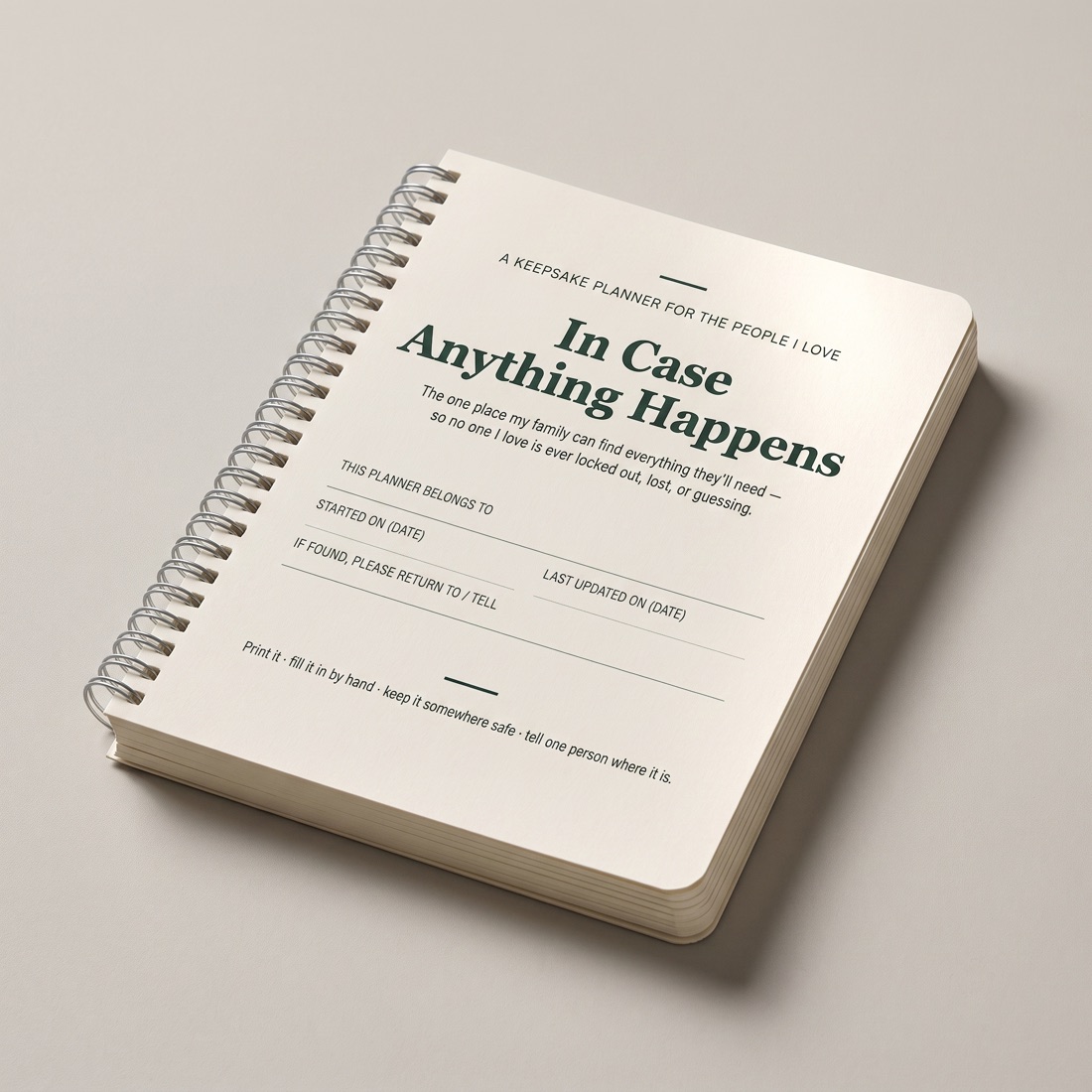
- Look for any written wishes. A will, a prepaid funeral contract, a planner, a letter — check the desk, the safe, the "important papers" drawer. If the person kept an emergency binder or planner, most of your next two weeks is already organized.
- Ask the funeral home for death certificates — order at least 10 certified copies. Banks, insurers, the DMV, pension plans, and utility companies each tend to want their own certified copy, and ordering extras now is far easier than re-ordering later.
- Notify their employer if they were working — ask HR about final pay, life insurance through work, and benefits for dependents.
- Keep paying nothing yet. Don't rush to settle bills or debts out of your own pocket — see what not to do below.
The first two weeks — the paperwork begins
- Social Security: the funeral director usually reports the death to SSA as part of their service — confirm it was done, or call SSA yourself at 1-800-772-1213 (SSA — When someone dies). Two things people miss: a surviving spouse (or in some cases a child) can apply for the one-time $255 lump-sum death payment within two years (SSA source), and Social Security cannot pay benefits for the month of death — a payment received for that month has to be returned (usa.gov).
- Check whether survivor benefits apply. Spouses, some ex-spouses, and dependent children may qualify for monthly survivor benefits — worth a call even if you're unsure (SSA — Survivor benefits).
- Notify ONE credit bureau. You don't need to call all three — notifying Experian, Equifax, or TransUnion places a death notice that the bureau shares with the other two, which helps prevent identity theft (Experian's official guidance).
- Find the will and identify the executor. If there's a will, the person named executor takes the lead on the estate; if there isn't one, state law decides who can be appointed. This is the moment to loop in a probate attorney if the estate is more than very simple — see our estate planning checklist for what each document does.
- Life insurance: locate policies (check files, bank statements for premium payments, and their employer) and start claims — insurers pay claims directly to named beneficiaries.
- Mail: to forward a deceased person's mail, USPS requires you to appear at a Post Office with proof that you're the appointed executor or administrator — a death certificate alone isn't enough (USPS official policy). The mail itself is useful: a month of it is a map of their accounts and bills.
- Don't cancel their phone. It feels like an obvious cost to cut — but that phone number receives the two-factor login codes you'll need to access accounts for months. Keep the line alive until the estate work is done. (If they set a Legacy Contact on their iPhone, that's your path to photos and iCloud data — here's how it works.)
The first few months
- Probate and the estate: the executor gathers assets, pays valid debts from the estate, and distributes what remains. Whether formal probate is needed depends on the state and the size of the estate.
- The final tax return: a final federal income tax return is filed for the year of death; a surviving spouse or personal representative typically files it, and there's a specific form (1310) for claiming a refund on behalf of the person (IRS — Deceased person).
- If they were a veteran: the VA provides burial benefits, memorial items, and in some cases a burial allowance and survivor payments — start at VA — Burials and memorials. (Specific dollar amounts are in our funeral planning guide.)
- Close or memorialize accounts: banks and brokerages (the executor handles these), then the long tail — subscriptions, utilities, memberships, social media. The person's mail and bank statements are your checklist.
- Update your own documents. If the person who died was your beneficiary, executor, or emergency contact, your own paperwork now needs a pass — our getting your affairs in order checklist is the gentle way to do it.
Who to call, in order
Every list buries this in prose, so here it is as a table. The order matters less than the grouping — the top rows are days, the bottom rows are weeks.
| # | Who | When | Why |
|---|---|---|---|
| 1 | Hospice line — or 911 if unexpected | Immediately | Legal pronouncement of death |
| 2 | Funeral home | First hours | Transport into their care (service decisions can wait) |
| 3 | Close family & friends | First day | Before any public announcement |
| 4 | Their employer (HR) | First days | Final pay, work life insurance, dependent benefits |
| 5 | Social Security (confirm) — 1-800-772-1213 | Week 1–2 | Usually reported by the funeral director; confirm + ask about the $255 payment and survivor benefits |
| 6 | Life insurance companies | Week 1–2 | Claims pay directly to beneficiaries |
| 7 | One credit bureau | Week 1–2 | Death notice propagates to all three — identity-theft protection |
| 8 | Banks & financial institutions | Week 2+ | Executor presents death certificate + authority |
| 9 | VA (if a veteran) | Week 2+ | Burial benefits and allowances have windows |
| 10 | Utilities, subscriptions, everything else | Month 1+ | The mail pile is your checklist (keep the phone line last) |
What NOT to do
The mistakes in the first weeks are almost all the same five:
- Don't pay their debts from your own pocket. Debts are generally paid from the estate, not by family members — you're typically only personally responsible if you cosigned, held a joint account, or in certain surviving-spouse situations in community-property states (CFPB's official answer). If a debt collector pressures you personally, that's a question for the executor or an attorney, not your checkbook.
- Don't make big financial decisions yet. Selling the house, moving, paying off large sums — grief is real cognitive load, and none of these have a deadline measured in weeks.
- Don't distribute belongings early. Even with the best intentions, things handed out before the will is read and the executor is confirmed cause the worst family conflicts. Let the process run.
- Don't announce publicly before securing the home. An obituary or public post that names addresses and service times also tells strangers when a house will be empty — it's an unpleasant, well-documented pattern. Announce, but keep details to what's needed.
- Don't cancel the phone or email accounts. Two-factor codes, password resets, and account recovery all run through them. They're tools until the estate is settled.
Common questions
What is the first thing to do after someone dies?
Get the death legally pronounced: call the hospice nurse if they were in hospice care, 911 if the death was unexpected at home, or let staff handle it in a hospital. That's the only true "first" — the funeral home, family calls, and all paperwork come after, at a human pace.
Who notifies Social Security when someone dies?
Usually the funeral director — reporting the death to SSA is a standard part of their service. Confirm it happened, or call 1-800-772-1213 yourself. Then ask two questions: whether the $255 lump-sum death payment applies to you, and whether you qualify for survivor benefits.
What is the "40-day rule" after someone dies?
It's a mourning tradition, not a law or deadline. Several faiths hold a memorial around the fortieth day — Eastern Orthodox Christianity most formally, with related customs in other traditions. If your family observes it, it goes on the calendar like the funeral; if you've never heard of it, nothing on this checklist changes.
How long does all of this take?
The urgent layer — pronouncement, funeral, first notifications — is about two weeks. The estate layer commonly runs months, sometimes past a year for complex estates. Treat it as a marathon run by the executor, not a sprint run by everyone.
Is there a checklist I can print and hand to family?
Yes — the printable version of this page (the email box above opens it instantly) covers the timeline and the call-order table. For dividing the work, the table is the part to hand out.