Planning Ahead
The Family Emergency Binder: What to Include
What actually belongs in a family emergency binder: the eight categories, the documents in each, where to keep it, and how often to update it — one practical checklist, no fluff.
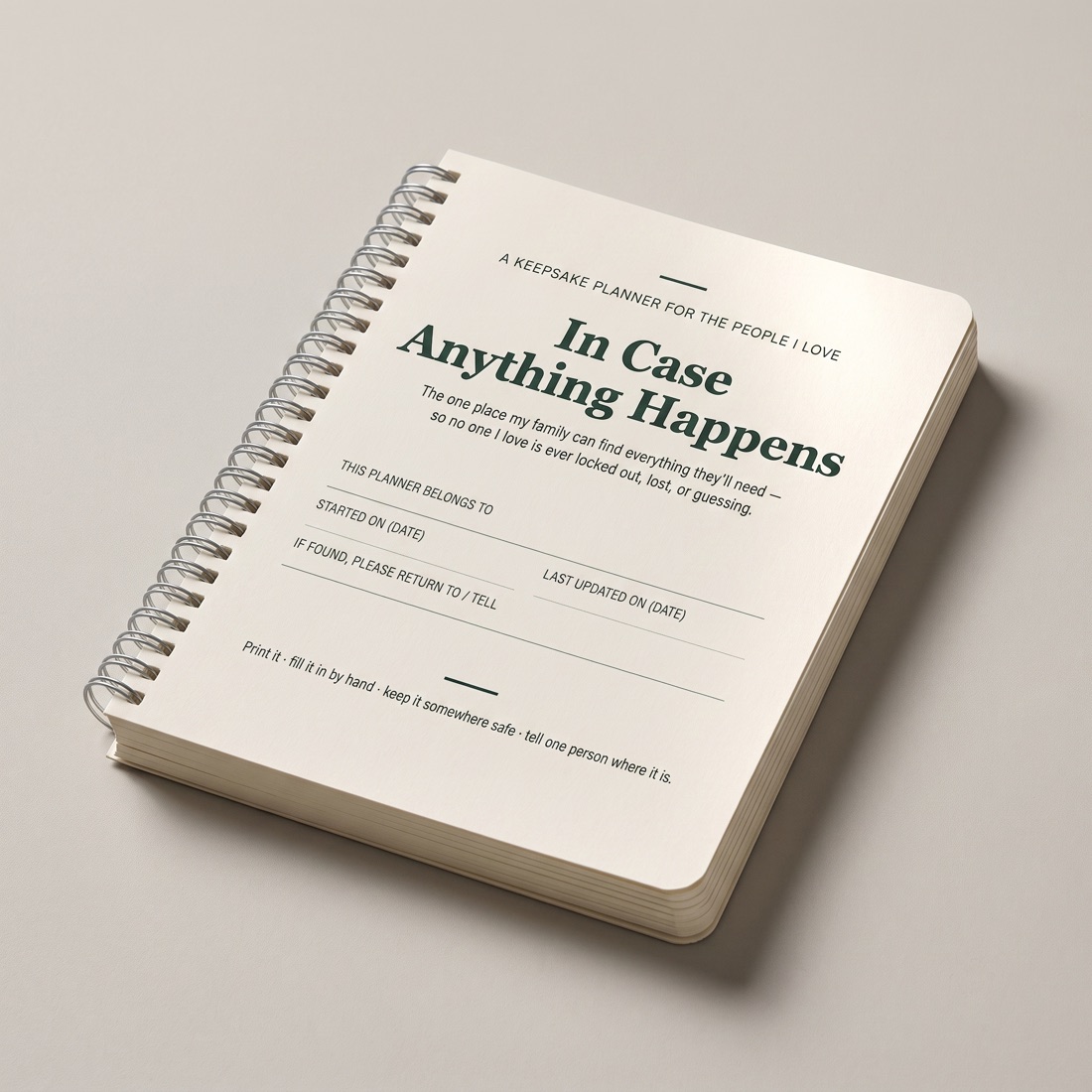
A family emergency binder is one physical place that answers the question "where is everything?" — for a hospital stay, a house fire, an evacuation, or the hardest version: a death in the family. If you're the person in your household who knows where everything is, the binder is how everyone else copes when you're the one in the hospital bed.
This page is the complete checklist: the eight categories, exactly what goes in each, where to keep the binder, and how often to touch it. It's long because it's complete — but you can build a genuinely useful version in one evening.
What a family emergency binder is — and why it's not just for disasters
A family emergency binder is a single organized collection of your household's vital information: identification, medical details, insurance, account lists, contacts, and instructions. In an emergency, whoever picks it up can run the household — pay the bills, talk to the insurance company, prove who's who.
People arrive at this idea from two directions. The disaster direction: FEMA's own emergency financial preparedness guidance recommends gathering exactly these categories — household identification, financial and legal documents, medical information — so a family can prove identity and recover after a flood, fire, or evacuation (ready.gov — Financial preparedness). The "what if something happens to me" direction — sometimes searched as a "death binder" — where the binder is how your family avoids the account-hunting scramble we walk through in what to do when someone dies.
Here's the honest secret: it's the same binder. The document that gets your family through a hurricane is ninety percent the document that gets them through losing you. Build it once, and it covers both.
The full checklist — eight categories
1. Identification & vital documents
- Copies of driver's licenses / photo IDs for each family member
- Birth certificates and Social Security cards (or a note of where the originals are)
- Marriage certificate, divorce decree, adoption papers if applicable
- Passports (or copies + location of originals)
- Military service records (a veteran's DD-214 unlocks burial benefits — it's one of the most-hunted-for documents there is)
- Pet records: microchip numbers, vet, vaccination records
2. Medical
- Each family member's medications, dosages, and prescribing doctors
- Allergies and medical conditions
- Health insurance cards (copies) and policy numbers
- Doctors and specialists with phone numbers
- Location of advance directives / living wills, if made (see the estate planning checklist for what these are)
3. Insurance
- Every policy: home/renters, auto, life, health, disability, umbrella
- For each: insurer, policy number, agent contact, and where the full policy document lives
- Life insurance specifically: who the beneficiaries are — this is the page a family opens first
4. Financial & legal
- Every bank account and credit union: institution + account type (numbers optional — institution names alone save days of searching)
- Retirement accounts, brokerages, pensions; any HSA/FSA
- Credit cards and outstanding loans (mortgage, auto, student)
- Property: deeds, titles, mortgage info, and where the originals are
- Location of the will, any trust documents, and powers of attorney — and the attorney's name if one drafted them
- Safe combination or key location, safe-deposit-box location and who has access
- Tax preparer contact + where past returns are kept
5. Emergency contacts
- Family phone tree: who to call first, and who calls whom
- Neighbors with keys; the friend who can take the kids or pets
- Employer/HR contacts for each working adult
- Attorney, financial advisor, insurance agent, clergy if applicable
6. Household & bills
- Every recurring bill: utility, provider, roughly when it's due, and how it's paid (autopay from which account?)
- Home basics a stand-in adult would need: where the water shutoff is, alarm codes, WiFi password, garage keypad
- Car details: where titles and spare keys are
7. Passwords & digital access
- Phone passcodes — the single highest-value line in the whole binder
- Email passwords (email is the master key to password resets everywhere else)
- Password manager master password, if you use one
- Apple Legacy Contact and Google Inactive Account Manager — set them (3 minutes each) and note here who you chose, because no tech company will hand your family your passwords, ever
- Two-factor backup codes for critical accounts
8. Final wishes
- Burial or cremation preference, and any service wishes — even two sentences spares your family the worst guessing (our funeral planning checklist shows every decision they'd otherwise face cold)
- Prepaid funeral or cemetery arrangements, if any, with the paperwork's location
- Location of any written letters to family
- Organ donor status
Where to keep it
The binder's whole value is being findable in a bad moment — by your family, not by a burglar. The standard that works:
- Physical home: a drawer, home safe, or fireproof document bag. If it's a safe, the combination has to be shared or the binder is locked away from the very people it's for.
- Not (only) a safe deposit box: in many situations a box can't be opened quickly by anyone who isn't on the account — the exact moment the binder is needed is the moment it's inaccessible. If you use one, make sure a second person is a co-renter.
- Tell two people. The binder that nobody knows exists doesn't exist. Spouse plus one adult child or trusted friend is the classic pattern.
- Grab-and-go: if evacuation is a realistic risk where you live, keep the binder where you could take it in under a minute, per FEMA's preparedness framing.
How often to update it
Once a year, plus after any life event that changes the answers: a move, a new account, a marriage or divorce, a birth, a new job, a diagnosis. The easiest system I know: put it on your birthday month as a recurring reminder — one evening, once a year, usually less than an hour once the binder exists.
Common questions
What should be in a family emergency binder?
Eight categories: identification and vital documents, medical information, insurance policies, financial and legal accounts, emergency contacts, household bills and access, passwords and digital access, and final wishes. The full item-by-item checklist is above — identification, insurance, and phone/email access are the pages that get used first in a real emergency.
Is a family emergency binder the same as a "death binder"?
Effectively yes. An emergency binder is built for any crisis — hospitalization, disaster, evacuation — and a "death binder" or end-of-life binder is the same collection with more weight on final wishes and estate documents. Build the eight categories once and you have both.
What about a family emergency KIT — is that different?
Yes — an emergency kit is supplies (water, food, flashlight, first aid) for surviving a disaster; the binder is information. FEMA recommends both. The binder is the part most families skip, and it's the part this page covers.
Should the binder be paper or digital?
Paper first. A binder works during a power outage, doesn't need a password, and can't be locked behind the exact account access it's supposed to provide. A digital backup (encrypted, with a trusted person holding access) is a fine supplement — as long as someone can actually get in without you.